
Blood Flow Restriction in Physiotherapy
What is Blood Flow Restriction Training (BFR)
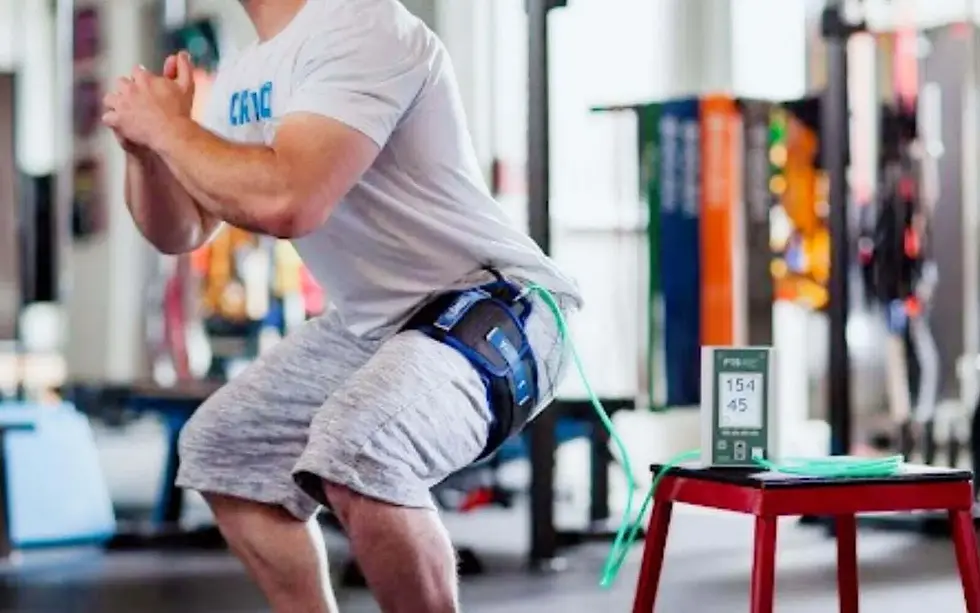
Blood flow restriction training, also known as occlusion training, involves partially restricting arterial blood flow to working muscles and occluding venous blood flow return using specialised cuffs leading to a localised hypoxic environment that triggers a cascade of physiological responses shown to promote muscle growth, strength gains, and tissue repair when combined with strength or aerobic training (1,2,3,4)
What is it used for?
Blood flow restriction with low-load resistance exercise (BFR+ RE) is a safe, tolerable, and clinically effective method of targeting increased muscle strength and muscle mass in patients where heavy-loading may not be feasible or appropriate, such as in the early stages of an ACL reconstructions (5). BFR represents a method to decrease the stress placed on the joints without compromising improvements in strength, so for postoperative, injured, or load-compromised individuals BFR represents a way to accelerate recovery and prevent atrophy.
Who can benefit from it?
The degenerative effects of muscle atrophy can be seen with both acute and chronic MSK injuries and results in prolonged treatment and/or immobilisation, such as with fractures and ligament injuries. Loss of strength is a major risk factor for osteoarthritis (OA) (13) and is one of the the most the most common MSK diseases responsible for reduced function and quality of life of sufferers.
It is clear that low-load BFR-RE is superior in multiple respects, including building muscle strength and size, to that of purely low load resistance training and is comparable to that of high load resistance training alone (11, 13, 14, 15). However, although low-load BFR-RE may not necessarily be superior to that of high-load resistance training in terms of muscle strength, the ability to train at a greater frequency with less mechanical stress on the joints allows for use in postoperative, injured, and cardiac rehabilitation patients, in season athletes and elderly individuals.
How does it work?
It is hypothesised that an ischaemic and hypoxic muscular environment is created during BFR causing high levels of metabolic stress, alongside mechanical tension when BFR is used in tandem with strength training. Both metabolic stress and mechanical tension work synergistically to activate other mechanisms for the induction of muscle growth.
These proposed mechanisms include: elevated systemic hormone production, cell swelling, production of reactive oxygen species (ROS), intramuscular anabolic/anticatabolic signalling, and increased fast-twitch fibre recruitment. However, at present these are mainly hypothetical.
Simplified, the blood flow restriction cuffs create an environment within the muscles and cells where the blood and all the components within are starved of oxygen temporarily resulting in both a physical and chemical stress on the cells that stimulates a similar response in muscle growth that is seen when living heavy weights, except the same response is seen when lifting much lighter loads.
Also, it is worth noting that greater motor unit recruitment is not limited to muscles distal to the area of occlusion only, and it has been shown that in both upper and lower extremity BFR, the more proximal muscle groups (gluteus maximus, shoulder [deltoid/rotator cuff], and pectoralis major) have been shown to have greater levels of recruitment as compared with controls (6)
So why doesn't every physio use it?
Quality research often takes a long time to transition from paper into the clinic, and there is still a great deal of further research needed in the area of BFR to fully verify its claimed benefits. Yet, the current research is promising in its effectiveness for MSK conditions and for mitigating the effects of muscle atrophy post-op, and therefore is a handy tool to have in the physio tool box for certain patients.
Can I use it myself at home?
Blood pressure cuffs are extremely practical and easy to use at home. Cost is a factor that inhibits both physios and patients from benefiting from this piece of kit unfortunately. As the effects are amplified if using three times weekly, I highly recommend my patients to purchase a pair of cuffs to use at home to prevent the negative affects of muscle loss.
I would personally recommend the BFR cuffs from SAGA Fitness or Occlusion Cuff Elite
Below are the Occlusion Cuff Elite that can be easily used at home for rehabilitation
What is the most effective protocol
For targeting muscle hypertrophy and preventing muscle atrophy in post-operative patients, the following protocol is generally recommended based on the current research to date.
20% to 40% of 1 repetition maximums are recommended with BFR cuff pressures set between 40% and 80% of limb occlusion pressure (LOP) (7). Four sets of repetitions (30, 15, 15, 15) has been most commonly used in practice and produces the beneficial adaptions noted in BFR. Rest periods between sets of 30 to 60 seconds is recommended, (relieving pressure between sets to allow re-perfusion). Two to three BFR sessions per week are recommended, in line with recommendations for skeletal muscle hypertrophy. A more aggressive regimen is noted, including twice-daily BFR training, may be a reasonable option to accelerate recovery in the early rehabilitation period following an injury or surgery. (7)
Muscle hypertrophy Method 1
30, 15, 15, 15 reps @ 20-40%1RM set to 40-80% limb occlusion30-60 sec rest between sets with pressure completely relieved 3/week
Muscle hypertrophy Post op Method 2 - aggressive option
30, 15, 15, 15 reps @ 20-40%1RM set to 40-80% limb occlusion 30-60 sec rest between sets with pressure completely relieved 2x/day
How do I measure arterial occlusion pressure in clinic (AOP)
Each person will have different arterial occlusion pressures based on limb girth, physiology, cuffs or wraps used, so the gold standard method is to use a hand-held Doppler probe together with a pneumatic cuff to find the arterial occlusion pressure (AOP) at rest (“maximum pressure” = 100%) and then prescribed the BFR for physical training based on this value (i.e., 50% of the AOP). In clinic, unless using a Doppler, it can often be measured more crudely using distal pulses to gauge when 100% limb occlusion is achieved and then prescribing 40-80% of that pressure. A tell tale sign your pressures are too high in clinic is >7/10 score in discomfort for the wearer, cold toes or fingers, pins and needles, and numbness in the distal limb.
Aerobic fitness and BFR (BFR-AE)
Postoperatively, as well as muscle circumference, the patient's aerobic capacity can severely diminish when hospitalized or especially in the elderly individuals leading to slower recovery rates and overall recovery. BFR with aerobic exercise (BFR-AE) has been more limited in research compared with resistance training, not as fashionable perhaps, but markers of aerobic fitness such as the volume of oxygen the body can take attain and use (VO2), along with exercise time to exhaustion, have all been shown to increase more compared to control training groups without BFR.(8)
In addition, low-intensity exercise in combination with BFR has shown similar substantial improvements in VO2 and strength even in already highly trained athletes (10). While it is often felt that a threshold of 50% VO2 should be reached to improve aerobic capacity, a clinical protocol for BFR-AE of 40% VO2 maximum (or walking at approximately 2-4 miles per hour) for as little as 15 to 20 minutes may be able to achieve similar effects over 2 to 6 weeks (17).
These effects are believed to be caused by a decrease in venous return, which is compensated for by increases in heart rate, resulting in adjustments to the effective window for aerobic adaptation. While not necessarily the main focus of BFR-AE, improvements in strength, muscle size, glycogen composition, capillary fiber density, and functional measures, such as timed-up and-go and chair sit-to-stand, also have been noted (18).
Aerobic protocol for elderly patients or those returning to aerobic activity
Cycling @ 40% VO2 max for 15-20 mins @ 40-80% LOPWalking 2-4 mph 15-20 mins @ 40-80% LOPDaily
BFR + Neuromuscular stimulation Training (BFR-NMST)
An up and coming area of BFR research is BFR combined with neuromuscular stimulation. Neuromuscular stimulation often is used in the early postoperative period and as maintenance/preventative therapy to help negate the atrophy post op. Early evidence suggests the effect of this therapy, which provides unloaded, isometric contractions, may be enhanced by BFR (11, 12). Further study is needed to investigate the use of NMST with open chain exercises and BFR, which could prove very useful in the the early recovery period following knee surgery where quadriceps control is often a limiting factor in rehabilitation progression.
Should some populations be avoiding BFR? What are the contraindications?
Contraindications of pBFR training should be taken into consideration, such as venous thromboembolism, peripheral vascular disease, unstable hypertension and pregnancy.
Summary
BFR is an exciting area of MSK research that could help prevent the debilitating effects of atrophy in post-op patients and help to increase the recovery speeds, aerobic capacity, and muscle hypertrophy in those individuals. I will personally be keeping an eye on the latest BFR and ACLR developments.
"If there is one paper to read on the area - read this."
Hughes L, Paton B, Rosenblatt B, et al (2017). Blood flow restriction training in clinical musculoskeletal rehabilitation: a systematic review and meta-analysis
British Journal of Sports Medicine; 51:1003-1011.
References
Batista MM, Silva DSG, Bento PCB. Effects of blood flow restriction training on strength, muscle mass and physical function in older individuals—systematic review and meta-analysis. Phys Occup Ther Geriatr. 2020;38(4):400–17.
Wortman RJ, Brown SM, Savage-Elliott I, Finley ZJ, Mulcahey MK. Blood flow restriction training for athletes: a systematic review. Am J Sports Med. 2021;49(7):1938–44.
Dos Santos LP, Santo RCE, Ramis TR, Portes JKS, Chakr RMS, Xavier RM. The effects of resistance training with blood flow restriction on muscle strength, muscle hypertrophy and functionality in patients with osteoarthritis and rheumatoid arthritis: a systematic review with meta-analysis. PLoS ONE. 2021;16(11):e0259574.
Abe T, Kearns CF, Sato Y. Muscle size and strength are increased following walk training with restricted venous blood flow from the leg muscle, Kaatsu-walk training. J Appl Physiol. 2006;100(5):1460–6.
Hughes L, Paton B, Rosenblatt B, et al (2017). Blood flow restriction training in clinical musculoskeletal rehabilitation: a systematic review and meta-analysis
Bowman E.N., Elshaar R., Milligan H., et al. Upper-extremity blood flow restriction: The proximal, distal, and contralateral effects—a randomized controlled trial. J Shoulder Elbow Surg. 2020;29:1267–1274.
Patterson S.D., Hughes L., Warmington S., et al. Blood flow restriction exercise: considerations of methodology, application, and safety. Front Physiol. 2019;10:533.
Abe T., Fujita S., Nakajima T., et al. Effects of low-intensity cycle training with restricted leg blood flow on thigh muscle volume and VO2MAX in young men. J Sports Sci Med. 2010;9:452–458.
Iversen E., Røstad V., Larmo A. Intermittent blood flow restriction does not reduce atrophy following anterior cruciate ligament reconstruction. J Sport Health Sci. 2016;5:115–118.
Held S., Behringer M., Donath L. Low intensity rowing with blood flow restriction over 5 weeks increases V̇O2max in elite rowers: A randomized controlled trial. J Sci Med Sport. 2020;23:304–308
Lixandrão M.E., Ugrinowitsch C., Berton R., et al. Magnitude of muscle strength and mass adaptations between high-load resistance training versus low-load resistance training associated with blood-flow restriction: A systematic review and meta-analysis. Sports Med. 2018;48:361–378
Natsume T., Ozaki H., Saito A.I., Abe T., Naito H. Effects of electrostimulation with blood flow restriction on muscle size and strength. Med Sci Sports Exerc. 2015;47:2621–2627
Petterson SC, Barrance P, Buchanan T, et al. Mechanisms underlying quadriceps weakness in knee osteoarthritis. Med Sci Sports Exerc 2008;40:422–7.
Hughes L., Paton B., Rosenblatt B., Gissane C., Patterson S.D. Blood flow restriction training in clinical musculoskeletal rehabilitation: A systematic review and meta-analysis. Br J Sports Med. 2017;51:1003–1011.
32. Centner C., Wiegel P., Gollhofer A., König D. Effects of blood flow restriction training on muscular strength and hypertrophy in older individuals: A systematic review and meta-analysis. Sports Med. 2019;49:95–108.
33. Slysz J., Stultz J., Burr J.F. The efficacy of blood flow restricted exercise: A systematic review & meta-analysis. J Sci Med Sport. 2016;19:669–675.
Park S., Kim J.K., Choi H.M., Kim H.G., Beekley M.D., Nho H. Increase in maximal oxygen uptake following 2-week walk training with blood flow occlusion in athletes. Eur J Appl Physiol. 2010;109:591–600.
Abe T., Kearns C.F., Sato Y. Muscle size and strength are increased following walk training with restricted venous blood flow from the leg muscle, Kaatsu-walk training. J Appl Physiol. 2006;100:1460–1466.


Comments